
The evaluation of new diagnostic technologies is commonly based on performance indicators such as sensitivity, specificity, accuracy, reproducibility, and turnaround time. These metrics are essential for understanding technological capability and supporting evidence-based implementation.
However, between specimen collection and result generation, a series of operational activities take place within the laboratory environment. These activities are often necessary for technology implementation but may receive limited attention when interpreting technology performance under routine conditions.
Looking Beyond Technology
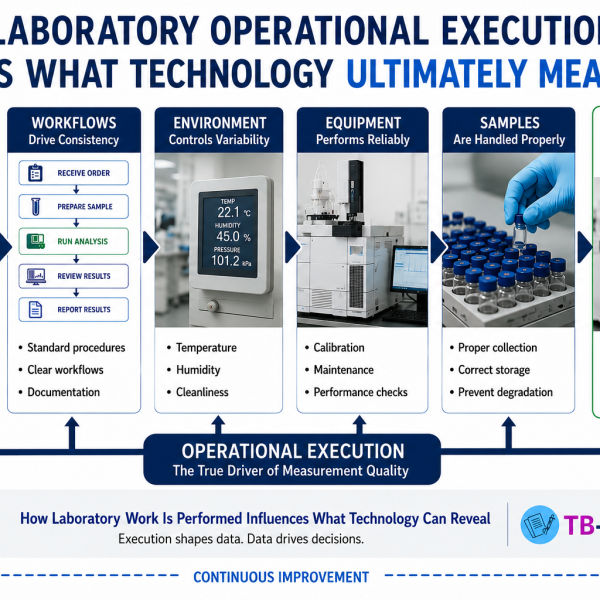
Diagnostic technologies do not operate in isolation. Their performance may be influenced by multiple operational components, including:
- People
- Workflows
- Environment
- Equipment
- Samples
Together, these components form what may be described as laboratory operational execution: the practical implementation of laboratory activities that occur before a result is generated and interpreted.
While quality systems, accreditation frameworks, and standard operating procedures provide important structure, the way laboratory work is performed under routine conditions may also influence diagnostic reliability and research outcomes.
Why Does This Matter?
In tuberculosis laboratories, examples of operational execution may include:
- Specimen processing procedures
- Decontamination practices
- Batch organization and workload distribution
- Sample handling and storage
- Equipment utilization
- Result interpretation practices
- Staff training and competency
These activities are often necessary components of routine laboratory work and may contribute to variability observed across laboratories implementing the same technology.
Operational issues may undermine the integrity of results and the reliability of downstream diagnostic outputs, making their effects difficult to distinguish from differences in technology performance.
Understanding these operational elements may therefore provide an additional perspective when evaluating diagnostic performance and interpreting laboratory-generated data.
Recent Scientific Contributions
As part of an ongoing effort to highlight the role of laboratory operational execution in diagnostic evaluation and clinical research, this perspective has been advanced through the following scientific publications developed through TB-LOG:
1. Strengthening Operational Quality to Support Accurate Tuberculosis Diagnosis and Safe Clinical Trials – IJTLD Open, 2026 (accepted for publication).
This publication discusses how operational quality may support diagnostic reliability and contribute to the integrity of clinical research activities.
2. Operational Considerations for Implementing Culture-Free Mycobacterial Sequencing in Routine Laboratory Settings – Journal of Clinical Microbiology, 2026 (accepted for publication).
This publication highlights operational factors that may influence implementation of emerging sequencing technologies under routine laboratory conditions.
3. Laboratory Results as Operationally Constructed Outputs – Clinical Microbiology and Infection, 2026 (revised manuscript submitted).
This manuscript explores the concept that laboratory results are generated through the interaction between technology and operational execution, emphasizing the importance of understanding both dimensions.
The TB-LOG Perspective
TB-LOG was established to help make the operational dimension of laboratory practice more visible within diagnostic evaluation and clinical research.
Before and during the evaluation of new technologies, TB-LOG can complement technology evaluation, quality systems, and accreditation frameworks by helping research teams better understand how laboratory operational execution may influence the data they generate and interpret.
Technology remains essential. However, understanding how laboratory work is performed may provide additional insight into the results that technologies ultimately measure.
Since 𝗹𝗮𝗯𝗼𝗿𝗮𝘁𝗼𝗿𝘆 𝗼𝗽𝗲𝗿𝗮𝘁𝗶𝗼𝗻𝗮𝗹 𝗲𝘅𝗲𝗰𝘂𝘁𝗶𝗼𝗻 𝘀𝗵𝗮𝗽𝗲𝘀 𝘄𝗵𝗮𝘁 𝘁𝗲𝗰𝗵𝗻𝗼𝗹𝗼𝗴𝘆 𝘂𝗹𝘁𝗶𝗺𝗮𝘁𝗲𝗹𝘆 𝗺𝗲𝗮𝘀𝘂𝗿𝗲𝘀, one question becomes relevant:
𝗔𝗿𝗲 𝘄𝗲 𝗮𝗱𝗲𝗾𝘂𝗮𝘁𝗲𝗹𝘆 𝗰𝗼𝗻𝘀𝗶𝗱𝗲𝗿𝗶𝗻𝗴 𝘁𝗵𝗲 𝗲𝗳𝗳𝗲𝗰𝘁 𝗼𝗳 𝗹𝗮𝗯𝗼𝗿𝗮𝘁𝗼𝗿𝘆 𝗼𝗽𝗲𝗿𝗮𝘁𝗶𝗼𝗻𝘀 𝘄𝗵𝗲𝗻 𝗲𝘃𝗮𝗹𝘂𝗮𝘁𝗶𝗻𝗴 𝗻𝗲𝘄 𝘁𝗲𝗰𝗵𝗻𝗼𝗹𝗼𝗴𝗶𝗲𝘀?
If this question is relevant to your research, TB-LOG would be glad to support your evaluation efforts.