
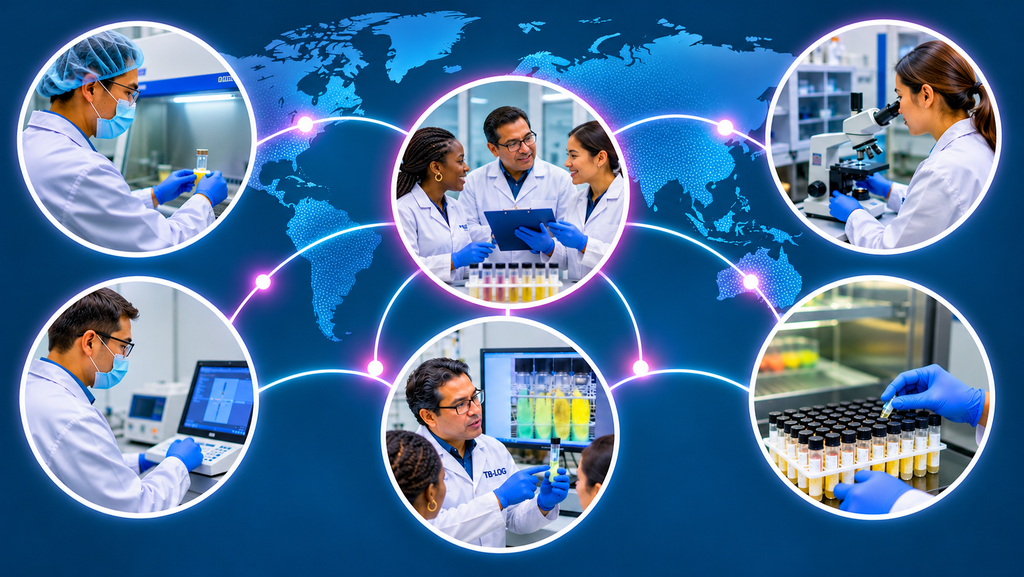
A Shared Objective
Tuberculosis laboratories share a common objective: providing reliable diagnostic results that support patient care, TB detection, and disease control.
Internationally recognized diagnostic methods, standardized operating procedures, quality management systems, laboratory networks, and data-sharing initiatives already make important contributions to this objective.
However, there may be further opportunities to strengthen cooperation by learning from the operational experience generated during routine laboratory activities.
This raises a question:
If laboratories perform established diagnostic procedures and work toward the same public health objective, how can they learn more effectively from each other’s operational experience?
Beyond Diagnostic Results
Routine laboratories generate more than the final diagnostic results reported to clinicians or research teams.
Specimen reception, processing conditions, reagent use, quality control, incubation, equipment performance, and workflow organization are all part of daily laboratory operations.
These activities generate valuable operational knowledge, often documented through routine forms, registers, laboratory information systems, and quality records.
Much of this information supports individual laboratory activities. However, the experience gained from routine laboratory operations could also contribute to learning across laboratories.
Understanding how other laboratories manage similar procedures, address operational challenges, and implement improvements could provide additional opportunities to strengthen laboratory quality.
Learning From Each Other’s Operational Experience
Laboratories performing established TB diagnostic procedures generate valuable operational experience every day.
Learning from each other’s practices, challenges, and approaches to quality improvement could help strengthen laboratory performance across different settings.
For example, laboratories performing mycobacterial culture could exchange experiences related to specimen processing, contamination, culture recovery, time to positivity, and workflow organization.
These discussions could help identify common operational challenges and explore possible improvements.
Such cooperation could begin through technical discussions, shared experiences, and the identification of common operational indicators.
Where appropriate, harmonized information could support more systematic comparisons, longitudinal assessment, and the early identification of operational risks.
At TB-LOG, we are interested in exploring how existing operational knowledge can contribute to collective learning and continuous quality improvement.
Building on Existing Laboratory Networks
Laboratory networks, quality assurance programs, external quality assessment, and laboratory information systems already provide important mechanisms for coordination and performance assessment.
These initiatives offer valuable foundations for further cooperation.
One opportunity worth exploring is how existing laboratory networks could strengthen the exchange of operational experience related to routine diagnostic procedures.
This does not necessarily require a sophisticated new technological platform.
It could begin by identifying common operational challenges, discussing how laboratories address them, and exploring which routine indicators might be useful for assessing performance over time.
Where appropriate, harmonized operational information could complement these discussions and support longitudinal monitoring and remote operational oversight.
Any exchange of information would need to consider data governance, confidentiality, security, and the comparability of laboratory indicators.
The intention is to complement existing quality systems, not replace them.
Standardized Procedures and Operational Consistency
Established diagnostic methods are supported by recognized procedures and SOPs. However, standardized documentation does not automatically ensure consistent execution.
Differences in specimen handling, processing conditions, equipment, staff practices, and workflow organization may influence laboratory performance.
Understanding these differences requires scientific knowledge, practical laboratory experience, and critical assessment of operational practices.
Laboratories performing similar procedures may encounter different operational challenges and develop valuable experience in addressing them.
Learning from these experiences could help laboratories identify risks, investigate inconsistencies, and strengthen the implementation of established diagnostic procedures.
It could also contribute to laboratory readiness for clinical research and provide a stronger operational foundation for evaluating new diagnostic technologies.
Learning From Interconnected Healthcare Systems
Interconnected clinical information systems demonstrate the value of making relevant information available to authorized healthcare providers to support continuity of patient care.
A related principle deserves consideration in laboratory operations.
Beyond sharing patient results, could laboratories benefit from greater opportunities to exchange experience and knowledge about how routine diagnostic procedures are performed?
Such cooperation does not necessarily require centralized laboratory databases.
Technical exchanges, shared operational experiences, and the use of agreed indicators could provide practical starting points for strengthening cooperation.
The emphasis should be on how laboratories can use their existing knowledge to improve operational decision-making and laboratory quality.
A Reflection on Working Together
At TB-LOG, we recognize the contributions of existing laboratory networks, quality systems, and initiatives that support cooperation among laboratories.
We believe there are further opportunities to strengthen these efforts by connecting scientific knowledge with day-to-day laboratory experience.
Laboratories may operate under different institutional structures, resources, and research programs. Nevertheless, many perform the same established diagnostic procedures and work toward the same public health objective.
Their operational experience can provide valuable lessons for other laboratories facing similar challenges.
Laboratory cooperation is not about competition or institutional dependence. It is about recognizing that the experience gained in one laboratory may help strengthen practices in another.
Perhaps one opportunity for further progress in TB laboratory quality lies not only in developing new diagnostic technologies, but also in strengthening how laboratories learn from the operational knowledge they already generate.
Would You Like to Learn More About This Approach?
If you would like to know more about this initiative or explore potential opportunities for collaboration, we would be pleased to hear from you.
Contact TB-LOG: contact@tblabopsg.com