
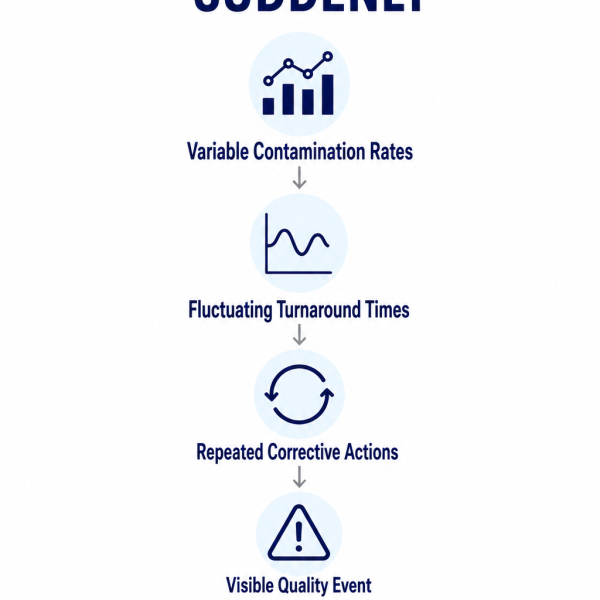
Quality events in laboratories are often perceived as isolated incidents that emerge unexpectedly.
A contamination event, an unexpected result pattern, repeated testing failures, or prolonged turnaround times may appear to arise suddenly and without warning.
𝗠𝗮𝗻𝘆 𝗾𝘂𝗮𝗹𝗶𝘁𝘆 𝗲𝘃𝗲𝗻𝘁𝘀 𝗮𝗿𝗲 𝗽𝗿𝗲𝗰𝗲𝗱𝗲𝗱 𝗯𝘆 𝗼𝗽𝗲𝗿𝗮𝘁𝗶𝗼𝗻𝗮𝗹 𝘀𝗶𝗴𝗻𝗮𝗹𝘀.
These signals are not always dramatic. They may appear as variable contamination rates, fluctuating turnaround times, differences between operators or shifts, repeated corrective actions, unresolved findings that remain open for extended periods, inconsistent documentation practices, or recurring deviations that repeatedly reappear despite previous interventions.
Viewed individually, such observations may seem unrelated or insignificant.
𝗧𝗼𝗴𝗲𝘁𝗵𝗲𝗿, 𝘁𝗵𝗲𝘀𝗲 𝘀𝗶𝗴𝗻𝗮𝗹𝘀 𝗺𝗮𝘆 𝗶𝗻𝗱𝗶𝗰𝗮𝘁𝗲 𝗰𝗵𝗮𝗻𝗴𝗲𝘀 𝗶𝗻 𝗵𝗼𝘄 𝗹𝗮𝗯𝗼𝗿𝗮𝘁𝗼𝗿𝘆 𝘄𝗼𝗿𝗸 𝗶𝘀 𝗯𝗲𝗶𝗻𝗴 𝗽𝗲𝗿𝗳𝗼𝗿𝗺𝗲𝗱.
This distinction is important because laboratories do not operate through technology alone. Diagnostic technologies function within an operational environment created by people, processes, supervision, training, documentation practices, workload management, and routine execution.
𝗧𝗲𝗰𝗵𝗻𝗼𝗹𝗼𝗴𝘆 𝗺𝗲𝗮𝘀𝘂𝗿𝗲𝘀 𝗼𝘂𝘁𝗰𝗼𝗺𝗲𝘀 𝗴𝗲𝗻𝗲𝗿𝗮𝘁𝗲𝗱 𝘁𝗵𝗿𝗼𝘂𝗴𝗵 𝗹𝗮𝗯𝗼𝗿𝗮𝘁𝗼𝗿𝘆 𝗲𝘅𝗲𝗰𝘂𝘁𝗶𝗼𝗻.
As a result, changes in operational performance may influence the conditions under which technologies generate results.
The challenge for laboratories is therefore not only identifying quality issues once they become visible.
𝗧𝗵𝗲 𝗰𝗵𝗮𝗹𝗹𝗲𝗻𝗴𝗲 𝗶𝘀 𝗿𝗲𝗰𝗼𝗴𝗻𝗶𝘀𝗶𝗻𝗴 𝗼𝗽𝗲𝗿𝗮𝘁𝗶𝗼𝗻𝗮𝗹 𝗽𝗮𝘁𝘁𝗲𝗿𝗻𝘀 𝗲𝗮𝗿𝗹𝘆 𝗲𝗻𝗼𝘂𝗴𝗵 𝘁𝗼 𝘂𝗻𝗱𝗲𝗿𝘀𝘁𝗮𝗻𝗱 𝘄𝗵𝗮𝘁 𝗶𝘀 𝗰𝗵𝗮𝗻𝗴𝗶𝗻𝗴 𝗮𝗻𝗱 𝘄𝗵𝘆.
This perspective does not replace quality management systems, audits, or corrective action processes.
Rather, it complements them by focusing attention on the operational signals that often precede measurable quality events.
𝗢𝗽𝗲𝗿𝗮𝘁𝗶𝗼𝗻𝗮𝗹 𝘃𝗶𝘀𝗶𝗯𝗶𝗹𝗶𝘁𝘆 𝗺𝗮𝘆 𝗵𝗲𝗹𝗽 𝗹𝗮𝗯𝗼𝗿𝗮𝘁𝗼𝗿𝗶𝗲𝘀 𝗶𝗱𝗲𝗻𝘁𝗶𝗳𝘆 𝗱𝗲𝘃𝗲𝗹𝗼𝗽𝗶𝗻𝗴 𝗶𝘀𝘀𝘂𝗲𝘀 𝗯𝗲𝗳𝗼𝗿𝗲 𝘁𝗵𝗲𝘆 𝗮𝗳𝗳𝗲𝗰𝘁 𝗽𝗲𝗿𝗳𝗼𝗿𝗺𝗮𝗻𝗰𝗲.
This concept reflects one of the core perspectives of TB-LOG: strengthening laboratory practice by improving awareness of the operational factors that influence consistency, quality, and reliability.
Quality events rarely emerge in isolation.
𝗤𝘂𝗮𝗹𝗶𝘁𝘆 𝗲𝘃𝗲𝗻𝘁𝘀 𝗮𝗿𝗲 𝗼𝗳𝘁𝗲𝗻 𝗽𝗿𝗲𝗰𝗲𝗱𝗲𝗱 𝗯𝘆 𝗼𝗽𝗲𝗿𝗮𝘁𝗶𝗼𝗻𝗮𝗹 𝘀𝗶𝗴𝗻𝗮𝗹𝘀.
Understanding those signals may provide opportunities for earlier intervention, improved consistency, and greater confidence in laboratory results.
TB-LOG
Making Laboratory Operations Scientifically Visible.